Sunday, September 29, 2013

Remember the Blizzard of '78?

Step back into the world of the 1970’s. Jimmy Carter is in the White House, and it’s a time of paisley prints, shag carpeting, green plaid sofas, five and dime stories, and quarter burgers at McDonalds. Remember when McAlpin’s and Shillito’s were popular stores in Cincinnati? When bell-bottoms, tie-dye tee shirts and maxi dresses were the latest fashions? When life was “groovy” and sometimes “heavy,” and the police were called “the fuzz”? Right on.

This is the world of Roses are Red, Diamonds are Blue, a new historical suspense novel by Donna Alice Patton, author of two children’s books and numerous articles for magazines and newspapers.

The story opens with a phone call from a dying man, Peter Barkley, giving his wife Laura a cryptic clue about the location of the priceless Anastasia Diamond, which is missing from the Wainwright Historical Museum where Peter is curator. 

Gripping the phone receiver for dear life, Laura realizes her husband has been shot. He is never coming home again.
A missing diamond, a fire at the museum, the death of the curator—the news reports somehow cast suspicion on the late Peter Barkley. 


Without Peter’s support, Laura and her twin daughters are reduced to living in near poverty while menacing characters keep harassing them with break-in’s, threatening messages, and even bombs. Laura desperately wants to find the Anastasia so that Peter’s name can be cleared at last. These dangerous men want to find the diamond to sell it on the black market.

Only Laura can solve Peter’s clue and find the diamond. But how can she keep her family safe and also maintain her life’s creed of total independence? When practically everybody is a suspect, who can she trust? The suspense keeps snowballing in this page-turner until the story culminates in the famed blizzard of ’78.


Donna Alice Patton is a regular contributor to History Magazine and the author of two mysteries for children, The Search for the Madonna (set during the Great Depression) and The Gift of Summer Snow: A Tale from the Garden of Mysteries.

Now an established writer, Patton talked in a recent interview about how she got started in writing. “I’ve always felt I was born to write. Even before I understood that books were written by real people, I had this feeling that making up stories was something I was meant to do. As a little girl my happiest moments were ‘writing’ episodes of my favorite TV shows in my mind as I lay in my bed at night.”

How did she break into print? “I spent years writing stuff (not very good) and submitting to every publication I’d ever read or seen. (Usually breaking all the rules and showing off as a complete newbie.) My first actual published pieces were Letters to the Editor of the Cincinnati Post and also some funny quips in the Cincinnati Enquirer at age eighteen.”
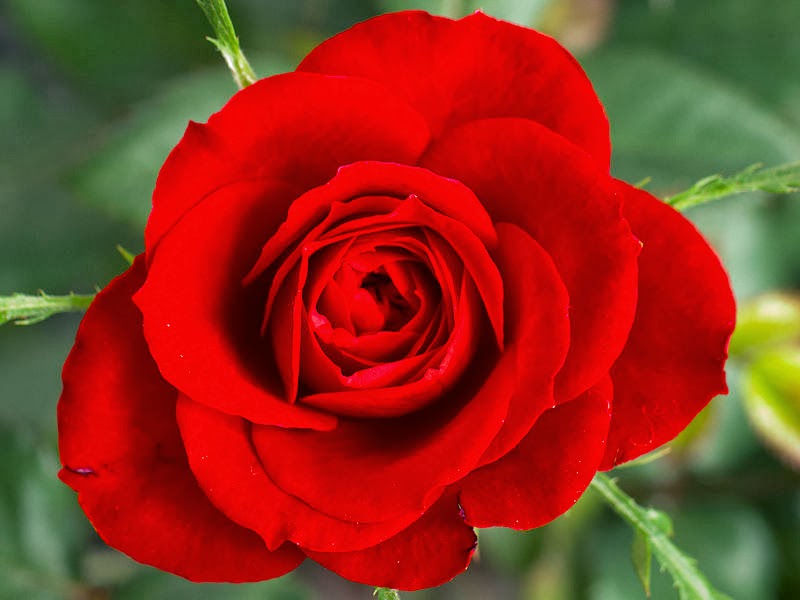


Roses Are Red, Diamonds Are Blue was released this year as an e-book by MuseItUp Publishing. It's available online from the publisher, at https://museituppublishing.com -- for Kindle or Nook or as a PDF file.


Saturday, September 14, 2013

What I Did on My Summer Vacation


               Or. . .The Divine Travesty

On my summer vacation, I went straight to. . .well, it was the Pastor's idea, actually. He thought that maybe if a group of us visited Hell, we would be more fervent in evangelism. Car-pooling was Sister Samantha's idea, though one wiseacre suggested we could go in a handbasket. Cute.

It doesn't take long to get there--especially in a car full of screaming children--so we quickly reached the outskirts, a frenzy of freeways, smoke-stacks, and everlasting road construction. At first, we thought it was Chicago.


We drove through a maze of slums and suburbs until we reached the Motel Six-Sixty-Six at Sulphur Springs. Our agent had booked us on the economy plan.

Since the next day was Sunday, we looked around for a church. No problemo. Hell has every denomination you can think of. So we picked a place that was serving brunch. The service was long and boring, and although God's name came up in songs and liturgy, no one seemed to know much about Him. It wasn't really all that different from back home.


Monday, we toured the correctional facility at Pitchfork Falls.

Walking down the long linoleum corridor, we heard a hideous screaming. When we came to the first open doorway, I thought the flickering lights were flames, but then I realized the room was filled with projectors casting ghoulish, strobing images on the walls and the faces of the damned--fuzzy, distorted images of palm trees, tropical sunsets, and water-skiers.


"Have no pity, " said the tour guide. "In their lifetime, these wretches lured innocent victims into their homes and subjected them to endless vacation slide shows."

The next room was filled with radios--hundreds of them--all screeching at full volume, while tormented souls writhed to the wail of rock, rap, and sports-casting. In life, they had played blaring boom boxes outdoors on quiet residential streets. Oh, if only they could go back and undo their wrongs. 


On second thought, naaaaa.


We saw room after room of agony and pain. In one, former ministers sat chained to hard benches listening to scatter-shot sermons that never came to a point. My husband squirmed when he saw men sitting for hours in buckets of ice water. Their crime? Leaving the toilet seat up. And when I saw those poor disfigured women branded with bar codes, I vowed never again to shop at a discount store without making sure each item in my cart has a price on it.

They were all there--dishonest auto mechanics, telephone solicitors, check-bouncing Congressmen, and the tech support people that leave you on hold for eternity. There is a God, and He's mad.

I don't think we're going back next year. It's getting too touristy and practically everybody goes there for the summer. But we've got some great slides of the trip, if you'd care to flip the light switch.


Well, on second thought, let's skip the slides.


DISCLAIMER: This piece was written just in fun. No actual theological doctrines were harmed in the writing of this parody of Dante's Inferno, Volume One of The Divine Comedy. 

Saturday, September 7, 2013

Monsters 101

Medusa, Daleks, Dementors--monsters! We love ‘em.

Seems like every culture throughout history has monsters. Big hairy, scary things that come from the sea, the deep caverns of earth, or outer space.  


A dragon from Thailand

Here are just a few examples that I hope will show the amazing scope and variety of big, bad bogeymen and behemoths.

Medusa

The face of Medusa, from Greek mythology, was hideous, and her hair was a tangle of venomous snakes. If you looked at her, you turned to stone. Now, this is an aberration worthy of the name monster. Bonus points for the turning-to-stone thing. (Incidentally, the hero Perseus beheaded the Medusa and used her head as a weapon, until he later gave it to Athena as a decoration for her shield. There's no accounting taste.)

Medusa, now marketing a unique
 line of hair care products

Iya

The storm-monster, Iya, is a character in Lakota mythology. He is a son of Inyan, the creator, and younger brother of Iktomi, the spider. He eats everything in his path—people, animals, trees, houses, whole villages—nothing is safe from his insatiable appetite. Faceless and formless, he is a tornado, a hurricane, a snowstorm, a rainstorm. He is thunder and lightning. He is wind and hail. Although he is dreaded, he is not seen as evil, since he is merely performing his assigned task. Iya lives under the water, and when he travels, he carries a tipi--painted with magical symbols--that holds all the storms like a quiver holds arrows.

Iya, blowing off steam

Shen

And the award for most artistic monster goes to. . . .

In Chinese mythology, the Shen is a shape-shifting clam-monster—a giant, pearl-producing clam who lives on the bottom of the sea. He belches bubbles that rise to the surface of the water and turn into mirages of stunning mansions and other architectural marvels. While this was doubtless disorienting to sailors, I’m afraid we have to give the Shen low marks in Scary, Ugly, and Dangerous. He might make the cover of Architectural Digest, but when it comes to scary, he is Frank Lloyd Wrong.

The Shen, Monster with an artistic flair


Bal-Bal

Bl-yuck! The Bal-Bal, of Philippine mythology, hangs out at funerals and graves the way Ralph and Potsie hang out at the malt shop. Basically, he steals corpses and eats them. Once Bal-Bal has eaten a body, he puts the trunk of a banana tree in the coffin to try to hide his evil deed. This sharp-clawed monster, as you might guess, has breath that could peel paint at fifty paces.

A "haunt" of the Bal-Bal

Nessie

The Loch Ness Monster, a cryptid said to inhabit Loch Ness in the Scottish Highlands, is the best known of all lake monsters. Is it a dragon? A sea serpent? A plesiosaur left over from the Days of the Dinos? There have been several sightings since the first in 1933, and even a few photographs, all disputed by the scientific community. Nessie is perhaps the most famous subject of cryptozoology, the study of animals whose existence has not been proven.

Nessie's first photo shoot

Zombies

[Cue creepy music.] Zombies are corpses that have been raised from the dead by some sort of sorcery. They are able to walk and talk, but they are controlled by a master. The Zombies have their roots in African and Haitian mythology, and have been greatly popularlized in horror films and lately, in humorous tv commercials.

Undead, over-acting

The Daleks

Although the British sci-fi series Dr. Who has its share of people-flashing-fangs and heads bobbing from serpent necks, it is the Daleks who pose the greatest threat to the Doctor, the human race, and the space-time continuum. The Daleks are cyborgs created by the scientist Davros, who merged a race of extraterrestrials with robotic shells. Purged of pity and compassion, the Daleks know only hatred. They look rather like giant salt and pepper shakers, and their whiney battle cry is “Ex-ter-mee-nate.”

Ex-ter-mee-nate!

So why do myth-makers invent monsters? Sea serpents and trolls and Cyclops and Balrogs and Dementors  and fire-breathing dragons and blood-sucking vampires and giant, radioactive grasshoppers?

I think it’s because we all have monsters to face in our lives, giants too big for us to slay in our own strength, forces beyond our control—atrocities committed by human monsters, diseases of the body and mind and sudden disasters and night terrors and death. Monsters are real, and the myth-makers put a face on them so that we can see them and understand them better.

Jabberwocky


One of the roots of monster means “to show.” We see this connection in the word demonstrate.  For ancient sea-faring people, sea monsters personified the very real dangers of stormy seas. In a more modern example, the dementors in the Harry Potter books suck all the joy out their surroundings. That sounds a lot like depression. Monsters in mythic tales show us our fears and challenge us to face them. To summon our courage. To use our wits. To seek Heaven's help. To conquer monsters with what we have at hand. 

We face monsters in stories so that we can better face the monsters in everyday life.

Bigfoot


Monday, August 12, 2013

Fantasy and Metaphysics

A tea party with the Mad Hatter

What is real? 

In our culture, we confront this question daily. We look at our red-headed waitress and wonder what color her hair is--really. A dog in a fedora--is that picture real or is it Photoshopped? That soulful song playing on Pandora--is it a real saxophone or a synthesizer?  We get an email asking for a donation and we wonder if the charity is real or a scam. We look at paper money--in a currency that is no longer asset-based--and we wonder if the money has any real value.


I was a small child when my family got our first television set. Magical black and white images flashed on the screen. How did those little people get inside the box? A commercial for cherry pie prompted me to walk up to the tv and put my hands on the pie. Then I tried to wipe my hands off on my dress, and everyone laughed. I guess that was one of the first times I had to confront the nature of reality.

Fantasy literature gets at the heart of metaphysics, the branch of philosophy that asks, "What is real?" 

Fantasy asks us to accept—for a time, while we’re reading a story—something fantastic as real. That a spider can spell words with her web. That a girl can step through a looking glass into another world. That animals can talk. That once the earth was inhabited by elves, dwarves, hobbits, and the occasional curmudgeonly wizard. 


A furry-footed hobbit

I just returned from a writing conference that opened with a mixer to introduce the writers to each other. We each had to choose a random question to answer from the questions on printed cards. My question was, "Do you feel an allegiance to any other country than the one you live in?"

I asked in return, “Does Middle-earth count? 


Someone said, “For you it does.” 


Okay, I admit it. Some of my most meaningful experiences have happened aboard the Dawn Treader with Reepicheep the mouse. Or trekking across the red plains of  Malacandra with a language professor named Ransom. Or fighting dragons with the Wizard of Earthsea. Or tessering through time and space with Meg Murray and Calvin O'Keefe.


What is real? In the movie The Matrix, machines have achieved global supremacy and imprisoned the surviving men in a “reality” generated by a computer program. And in The Truman Show, a man grows up from baby to adulthood without knowing his life is being lived on the set of a reality show. It's kind of hard to watch these stories without wondering just how real our own reality is. 


In fact, fantasy is probably the best vehicle for pondering serious questions about reality.

When I read a Grisham novel, I find myself in a world of lawyers and courtroom shenanigans. Though the stories are fictional, I have some sense that they could actually happen. The world of a Grisham novel is not all that different from the world I live in. I guess you could say that world is fairly realistic.


But when I read fantasy, I am often transported to a world quite unlike my daily experience. I may find myself on a different planet or a parallel universe where fishes grant wishes and carpets can fly. The fantasy world may be nothing like the "real world," or it may be just like it--except that marshmallows have magic powers or a junkyard is a portal to another dimension. 

I believe it is this sense of other-worldliness that helps us to step out of our ordinary lives and thereby see our own world more clearly.


Is this the ultimate escapism and denial--to cast off even the laws of physics and the limitations of my daily life?  I think it's much more than that. 

It's a way of thinking about what's real and about what really matters. It's a way of sneaking a glimpse into a higher kind of reality than the one we often know in this life--a reality where the weak are strong and the poor are rich; where foolish things confound the wise; where death is a beginning, not the end; where love and justice prevail; where happy thoughts can make you fly.


What is real? This is a question with no easy answer. It's a dialogue that has been going on for ages of man. And fantasy is a great way for writers and readers to continue the conversation.


Sunday, July 14, 2013

Where Books Come From--the Shocking Truth!

Recto. Verso. 

Intro. Extro. 

Front Matter. Back matter. (Gray matter, dark matter?) 

Kerning. Cropping. Half-title. Frontispiece. Colophon. Perfect binding. And my personal favorite, full bleed—which sounds painful and potentially fatal.

In the past few months, I’ve learned more publishing lingo than I actually wanted to know, while editing and designing a book "from scratch," just like Grandma's biscuits. 

You see, all this time, I thought that books just magically appeared on bookstore shelves, the way food magically appeared on the table when I was a child. Another illusion brutally shattered!


Now I know the shocking truth about where books come from--and, like childbirth, it's not pretty, Sister. They come from hard work and lots of it. They come from working day, night, late night, twilight, work days, and holidays--taking time “off” only to work on other urgent projects.

Like all such ACP’s (all-consuming projects), it kept expanding to fill the available space. I signed on to edit and compile the book, with no way of knowing that the professional who was going to do the layout and cover would suddenly become unavailable, leaving me to stumble blindly through the book production process.

If you have ever found yourself engaged in an ACP, you know how it goes. You wake in the morning, ingest large quantities of caffeine, fire up one or more computers, and desperately try to remember under what circumstances you actually agreed to do this.

I’ve got to quit drinking, you think. Or if like me, you don’t drink, you think, today is as good a day as any to start.


Of course, the upside of this particular ACP, was the pleasure of watching a good book take shape before my eyes. 

The book is Writer's Coffee House, and the authors are members of a group called The Writing Academy and a few special guest contributors. In this book, writers share their stories and struggles, their mistakes and successes, their experience and encouragement. 


I love the story Kathy Bolduc tells about a strange dream at a writing retreat and how that weekend turned into a lot less writing and much more retreat. Olga Williams talks about hearing T. S. Eliot speak to a group of English teachers and how this experience shaped her life of teaching and writing. Trust me--it wasn't in any way you could guess! 

And I'm always inspired when I read Patricia Lorenz's account of how her "Baggy Yellow Shirt" story circled the globe and launched her career. The yellow shirt story is so popular that you've probably read it in an email forward (uncredited, of course) and never guessed at the incredible story-behind-the-story.


My great hope is that this book will simply bring encouragement to writers. Encouragement and a sense of community. A reminder that though most of the time we wrestle with words alone, there is a vast fellowship of friends we have never met, yet who understand our struggles and want to cheer us on. 

And that is the concept behind the Writer's Coffee House. If you happen to know a writer who could use a little encouragement today, perhaps you could pass the word along.

Find out more at http://www.writerscoffeehouse.net.


Saturday, July 6, 2013

The Rules of Writing (Cough, Cough!)


If you hang around writer’s workshops or read books about creative writing, you’re going to encounter “the rules.”

And by encounter I mean smash into, in a race-car-encounters-brick-wall kind of way.


  • Never end a sentence with a preposition.
  • Active voice is always better than passive.
  • Exterminate all adverbs.
  • Write your fiction from a single point of view—no head-hopping!
  • A split infinitive is a moral failure.
  • Never start your story with a prologue.

And these are only a few examples from a list that can span Ohio and half of Pennsylvania.


If you break these rules, you will incur the Wrath of the Rule-Keepers. (Note: you have to shout "Wrath of the Rule-Keepers" into an empty metal coffee can to get a menacing but really cool echo effect.)

The Rule-Keepers love to blurble on about why their writing is superior to yours because you--low-life that you are--broke their rules.

In all honesty, I never met a rule of writing I liked. Any time somebody gives me a rule, I immediately start thinking of exceptions. 

For example, one of the rules is that you’re not supposed to repeat words and phrases. You should bend over backwards to keep from writing anything like this: "Ivan held the priceless gemstone in his weathered hand. By some strange alchemy, the gemstone caught the hot fire of the sun and transformed it into cold fire, the beating rainbow heart of the gemstone."

My exception? Sometimes repetition creates lovely word-music. As in the Sermon on the Mount: "Blessed are the pure in heart. . . . .Blessed are the peacemakers. . . .Blessed are. . . ."


My objection really isn’t to the rules themselves. They are generally good guidelines. Most of the time you should probably avoid passive voice and try not to end a sentence with a preposition, and yadda-yadda.

My problem is in setting these guidelines up as the Law of the Medes and Persians, which altereth not. In other words, as rules for everyone to follow in every situation.

For one thing, by this time next week, there will be a different set of rules. Someone will decide that we should replace all nouns with corned beef and cabbage or that you should do all your writing in second person. The grammar gaffs that English teachers rail against today may be standard usage tomorrow. And all their railing (and wailing) will have been in vain. 

When it comes to the rules of writing, take what you need and leave the rest.


And since I'm as qualified as the next hack to make up rules, here are the Stark Raving Mythopath's Rules of Writing.

(Oh yeah, you were supposed to shout that last part into the coffee can too.)

1. Write honestly, from your heart. Don't be afraid to tell the truth. You can decide later if anyone else should read what you've written.

2. Lighten up. If you aren't enjoying writing--at least some of the time--quit immediately. Find something else to do that you do enjoy.

3. Don't be a control freak. Allow yourself to be surprised by the words that appear on the paper.

4.T'is more blessed to connect with your reader than to write with perfect grammar or with perfect anything.

5. If you don't begin, you can't finish. If you don't try, you have already failed. Don't let the Rule-Keepers make you afraid to start.


My great fear isn't that I will break the precious rules but that I will fail to write anything worth reading.

Somerset Maugham said, "There are three rules for writing a novel. Unfortunately, nobody knows what they are." For me, this whimsical quote begins to capture the mystery, the magic, and the fearful leap of faith that writing is.

In art, there are no rules. Or if there are rules, then unfortunately--or perhaps fortunately--nobody knows what they are.

DISCLAIMER: I just spent a few months editing an anthology and applying various rules to everyone's writing. The result? I have a new appreciation for just how subjective the rules of writing and editing are. In that book there wasn't a single paragraph--maybe not even a single sentence--that two editors couldn't clash swords about. This experience only served to reinforce my belief that "the rules" should serve the artist, not the other way around.

Saturday, June 29, 2013

The Founding Mothers

George Washington, Ben Franklin, Paul Revere — let’s face it. When we think of the American Revolution, we think of men — the Founding Fathers.

But what about the many women who fought for our freedom? And why did I not learn about them in history class back at Jurassic High?


Mercy Otis Warren
Mercy Otis Warren had a farm and a family to manage. She also had a gift for writing. She wrote letters to the newspaper, complaining about King George III. She had to write these letters without signing them. Otherwise, British soldiers would have come knocking on her door.

She also wrote plays. One was called  A Model Celebration, and it portrayed mermaids enjoying the tea that Boston patriots had tossed into the harbor during the Boston Tea Party. Mercy helped to shape people’s opinions and stir up the Revolution.

In 1781, the British General Cornwallis “camped” on the property of Martha Bell — meaning the Brits moved into her house and took over her mill. When Cornwallis finally moved on, some American officers asked Martha if she would spy for them. She was only too happy to help.

She saddled her horse and rode to the General’s new camp, where she complained to Cornwallis that some of the men had stolen things from her farm. While the general questioned his troops, Martha made mental notes about the British army — how many cannons and horses they had, how many wounded men. The information she gathered was very helpful to the Americans.

Elizabeth “Betty” Zane was a teenage girl in what is now known as Wheeling, West Virginia. A group of about 300 British and Shawnee allies attacked a group of fewer than 50 American settlers. The settlers were quickly running out of gunpowder and other necessary items. Brave Betty volunteered to run back to her home and get more supplies. 


Elizabeth Zane

When Betty left the fort, the enemy soldiers ignored her. After all, she was just a girl. But when she returned, carrying bags, they guessed her mission and opened fire. Somehow she slipped through a barrage  of bullets and got the supplies to the settlers. When dawn came, the British were worn down, and they moved on. 


Deborah Sampson
When Deborah Sampson was 21 years old, she cut off her hair and enlisted in the Continental Army—as a man. She gave her name as Robert Shurtleff. The other soldiers teased “Robert” for being “too young to shave.” Injured several times, she treated herself rather than have the doctor check her out. Once she even cut a bullet out of her own thigh.

But one day Deborah came down with a fever and fainted. She was carried to the doctor’s tent, and the doctor discovered her true identity. She was honorably discharged and sent home, after serving her country well as a soldier. 


  • Sybil Ludington, a 16-year-old girl in New York, rode her horse Star forty miles at night to warn of a British invasion.
  • Phyllis Wheatley, who came to America from Africa aboard a slave ship, wrote stirring poetry about liberty.
  • Esther Reed and Sarah Franklin Bache collected money for military uniforms and organized sewing groups to make them.
  • Rebecca Stillwell Willets saw British soldiers landing on the beach. Since all the men were fighting elsewhere, she fired a canon at the enemy and drove them away.
Sybil Ludington


And these are only a few of the inspiring true stories of the women and girls who made a real contribution to the Revolutionary War. They melted their best pewter dishes to make bullets. They carded wool and spun cloth. They served as nurses. They made brave and perilous journeys to bring information and supplies to the troops. In some cases, they fought in battle right alongside the men.

So as we celebrate Independence Day, let’s not forget our courageous and more-than-amazing Founding Mothers!